
10 Reasons Your Commercial HVAC Isn’t Ready for Fall (And How to Fix Them Before the First Cold Snap)
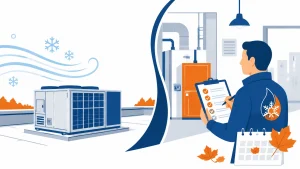

Fall arrives quickly in South Jersey. One week, your commercial HVAC system is handling humid summer temperatures. The next, employees and tenants are asking why the building is still cold in the morning.
To replace or not to replace? To repair or wait? These questions become much more urgent when the first cold snap arrives and heating equipment has not been properly inspected.
For commercial property owners, operators, and facility managers, fall preparation is not simply about comfort. It helps you reduce emergency repair costs, avoid business downtime, control energy waste, and protect the long-term value of your equipment.
Here are 10 common reasons your commercial HVAC system may not be ready for fall: and what you can do about each one.
1. Fall maintenance was overlooked
The most common problem is also the most preventable: the heating system was never scheduled for a professional fall tune-up.
Commercial HVAC equipment sits through long periods of heavy use. During the summer, motors, belts, electrical components, coils, and controls may experience significant wear. When heating season begins, small problems can quickly become a no-heat emergency.
The practical fix
Schedule a professional commercial preventative maintenance inspection before sustained heating begins. A proper visit should include cleaning, safety checks, burner adjustments, blower inspection, and testing of the system’s operating sequence.
This is why seasonal maintenance matters: it gives you an opportunity to identify problems while you still have time to plan and make repairs.
2. Burners or heat exchangers are dirty or damaged
Gas-fired heating equipment depends on clean burners and a properly functioning heat exchanger.
Burners create the flame that produces heat. If they are dirty or blocked, the flame may be weak, uneven, or unable to ignite reliably. A heat exchanger transfers heat to the air without allowing combustion gases to mix with the indoor air. Cracks or damage can create serious safety concerns, including carbon monoxide exposure.
The practical fix
Have a licensed commercial HVAC professional:
- Inspect and clean the burners
- Check gas pressure and ignition components
- Examine the heat exchanger for damage
- Verify proper flue and exhaust operation
- Test safety switches and shutdown controls
Do not attempt to clean gas burners or inspect a heat exchanger without the proper training and instruments. These components require specialized knowledge and careful testing.
3. Air filters are clogged
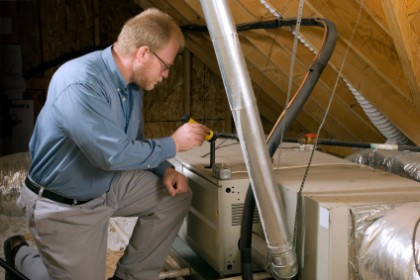
A clogged filter restricts airflow. That makes the blower work harder, increases energy consumption, and can cause uneven temperatures throughout the building. In severe cases, poor airflow can cause equipment to overheat or shut down.
Commercial buildings may require more frequent filter changes than smaller residential systems, particularly when they have high occupancy, construction activity, dust, or extended operating hours.
The practical fix
Check filter condition as part of your fall building walk-through. Replace filters with the correct size and efficiency rating according to the equipment manufacturer’s requirements.
Do not assume a filter is acceptable simply because air is still coming from the vents. Restricted airflow can reduce performance long before the system stops working.
South Jersey Heating and Cooling can also help you establish a practical commercial belts and filters schedule based on your building’s usage.
4. Thermostats and building controls are not calibrated
A thermostat or building automation control can display the wrong temperature, use incorrect schedules, or fail to communicate properly with the HVAC equipment.
In a commercial property, even a small control issue can lead to simultaneous comfort complaints, overheating, unnecessary heating cycles, and higher utility bills.
The practical fix
Test each thermostat and control zone before the first cold snap. Confirm that:
- The displayed temperature matches the actual room temperature
- Occupied and unoccupied schedules are correct
- Heating setpoints are appropriate
- Sensors are not blocked by furniture, sunlight, or equipment
- The system responds correctly to a call for heat
If your system uses a building automation platform, request a professional commercial HVAC controls review. Correct controls help you heat the building when needed without paying to heat empty spaces.
5. Summer wear was never addressed
Your system may have provided cooling all summer, but that does not mean it is ready to provide heating.
Summer operation can reveal or create issues such as refrigerant leaks, dirty coils, damaged electrical connections, clogged condensate drains, worn belts, and failing motors. Heat pumps and systems with shared air handlers may rely on many of the same components during the heating season.
The practical fix
Ask your technician to review unresolved summer observations before changing the system to heating mode. Depending on the equipment, the inspection may include:
- Refrigerant leak checks
- Coil cleaning
- Condensate drain inspection
- Electrical connection testing
- Motor and belt evaluation
- Blower wheel cleaning
- Heat pump operation testing
A fall tune-up should consider the complete system: not only the furnace or boiler.
6. Ductwork or the building envelope is leaking heated air
Your HVAC system may be producing heat correctly, but leaks can prevent that heat from reaching the occupied space.
Leaky ductwork allows conditioned air to escape into ceilings, mechanical rooms, or wall cavities. Building envelope leaks around doors, windows, loading docks, and penetrations allow outdoor air to enter and conditioned air to escape.
The practical fix
Look for rooms that remain cold, excessive drafts, damaged duct insulation, disconnected duct sections, and doors that do not seal properly. Have a qualified contractor inspect and seal ductwork where necessary.
For larger energy concerns, consider a commercial energy audit. An energy assessment uses measurements and building data to identify where heating dollars are being lost.
The goal is not merely to turn the thermostat higher. It is to keep the heat you already paid for inside the building.
7. Carbon monoxide and safety checks were ignored
Any commercial building with combustion-based heating equipment needs appropriate safety testing before the heating season.
Carbon monoxide is an odorless, colorless gas that can result from incomplete combustion or venting problems. A carbon monoxide detector is important, but it does not replace professional equipment inspection.
The practical fix
Include these items in your fall safety review:
- Heat exchanger inspection
- Combustion and burner testing
- Flue and vent inspection
- Carbon monoxide testing with proper instruments
- Limit, rollout, and pressure switch testing
- Electrical and ignition safety checks
If a carbon monoxide alarm sounds, move occupants to fresh air and follow emergency procedures. Do not continue operating equipment that may be unsafe until it has been evaluated by a qualified professional.
8. Aging equipment has not been evaluated
Older equipment may still operate, but it may be less reliable, less efficient, and more difficult to repair. Waiting until a major component fails can leave you with limited choices during the busiest part of the season.
The practical fix
Ask for an honest condition assessment before winter. Your HVAC professional should help you understand:
- The equipment’s current condition
- Recent repair history
- Parts availability
- Expected efficiency
- Remaining service life
- Whether replacement can be planned during a slower period
Replacement is not always the immediate answer. However, brand-new commercial heating equipment can improve efficiency, reliability, and long-term operating costs when an older system has become a repeated source of disruption. Review commercial HVAC installation options before an emergency forces the decision.
9. The heating-season rush has already begun
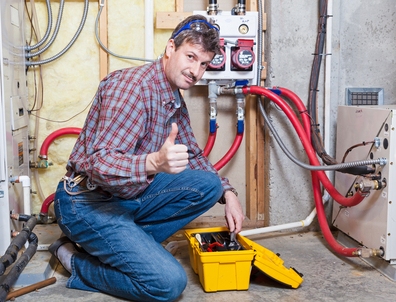
Many commercial property managers wait until the first cold morning to schedule service. By then, HVAC contractors may be managing a high volume of startup calls, repairs, and emergency breakdowns.
A delayed appointment can also delay parts, planned repairs, and equipment replacement decisions.
The practical fix
Schedule your fall service now, before the seasonal rush. If you manage multiple properties, create a written schedule that identifies:
- Each building and system
- Equipment type and age
- Filter sizes and replacement dates
- Known repair needs
- Tenant comfort concerns
- After-hours access requirements
- Emergency contacts
A commercial maintenance agreement can make this process easier. South Jersey Heating and Cooling can tailor service visits to your building’s schedule, budget, and operational needs. Maintenance agreements may also provide priority scheduling when service is needed.
10. There is no emergency plan for the first cold snap
Even well-maintained equipment can experience an unexpected failure. The difference is how prepared you are to respond.
If nobody knows who to call, where equipment shutoffs are located, or how to communicate with tenants, a repair can become a larger operational problem.
The practical fix
Prepare a basic HVAC response plan before cold weather arrives:
- Keep your HVAC contractor’s contact information accessible.
- Document equipment locations and model numbers.
- Identify critical areas that require immediate heat.
- Confirm who can authorize emergency repairs.
- Establish tenant and employee communication procedures.
- Review access to mechanical rooms and rooftops.
- Know how to report unusual odors, noises, or unsafe conditions.
South Jersey Heating and Cooling provides 24/7 commercial emergency HVAC service for heating and cooling problems that cannot wait until the next business day. Prompt, professional service can help limit downtime and protect tenant comfort.
A fall-ready HVAC system protects your bottom line
The first cold snap should not be your system’s first heating test. Dirty burners, clogged filters, faulty controls, air leaks, aging equipment, and neglected safety checks can all contribute to breakdowns, energy waste, and uncomfortable commercial spaces.
What it really comes down to are a few key issues: inspect equipment early, correct small problems before they grow, and plan service around your building’s needs.
For more than three decades, South Jersey Heating and Cooling has helped commercial property owners and facility managers throughout southern New Jersey maintain reliable heating and cooling systems. Our licensed professionals provide practical recommendations, quality workmanship, and service designed to minimize disruption to your operations.
Schedule your fall commercial HVAC inspection or ask about a customized maintenance agreement by calling 609-488-2253 or requesting service online. And if your system fails unexpectedly, South Jersey Heating and Cooling is available 24/7 for commercial HVAC emergencies.