

Commercial HVAC Maintenance Agreements vs. Pay-Per-Repair: Which One Actually Saves Your Building Money?
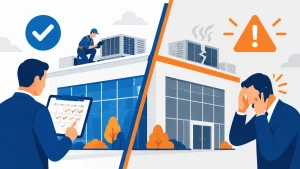

If you manage a commercial building, you have probably faced this decision: Should you pay for a customized HVAC maintenance agreement, or simply call for service when something breaks?
Pay-per-repair can appear less expensive because you are not committing to a scheduled service plan. However, the real cost of HVAC ownership includes more than the repair invoice. You also need to consider emergency rates, business disruption, tenant complaints, energy waste, and the possibility of replacing equipment earlier than expected.
For most commercial properties, proactive maintenance from South Jersey Heating and Cooling provides better long-term value. A well-designed agreement helps you plan expenses, reduce avoidable breakdowns, and keep your building comfortable with minimal disruption to daily operations.
Maintenance Agreement vs. Pay-Per-Repair: The Basic Difference
A maintenance agreement is a scheduled service plan. A licensed HVAC professional visits your property at planned intervals to inspect, clean, test, and adjust your heating and cooling equipment.
Pay-per-repair, sometimes called reactive or break-fix maintenance, means you request service only after equipment stops working or a serious problem becomes obvious.
Here is how the two approaches compare:
| Consideration | Maintenance Agreement | Pay-Per-Repair |
|---|---|---|
| Budgeting | Planned and predictable | Unpredictable repair bills |
| Service timing | Scheduled before peak demand | Often during an emergency |
| Response | Priority service may be included | Availability depends on the schedule |
| Equipment condition | Problems can be found early | Problems may worsen unnoticed |
| Downtime risk | Lower | Higher |
| Equipment life | Better opportunity to extend useful life | Greater risk of premature replacement |
| Tenant and occupant comfort | More consistent | More vulnerable to sudden outages |
Pay-per-repair is not always inappropriate. It may make sense for a low-priority storage area or a small piece of equipment where downtime has little financial impact. But for most commercial buildings, relying on it as the entire maintenance strategy creates unnecessary risk.
The Hidden Costs of Reactive HVAC Repairs
The repair invoice is only one part of the cost when a commercial HVAC system fails.
1. Emergency service can cost more
When a system breaks down during a heat wave, cold snap, weekend, or overnight shift, you may need immediate service. Emergency work can involve higher labor costs, expedited parts, and more complicated troubleshooting.
A maintenance agreement does not eliminate every emergency. However, it can reduce the number of emergencies and may provide priority access when a breakdown does occur. South Jersey Heating and Cooling offers 24/7 emergency HVAC availability because commercial problems do not always happen during convenient business hours.
2. Downtime affects your business
A failed rooftop unit can affect much more than indoor temperature. Depending on your property, HVAC downtime may interrupt:
- Retail operations
- Office productivity
- Manufacturing or warehouse processes
- Customer service
- Employee comfort
- Temperature-sensitive inventory
- Tenant operations
- Scheduled events or appointments
In a multi-tenant building, one HVAC failure can also lead to repeated complaints and urgent calls from occupants. Even if the eventual repair is manageable, the operational impact may be substantial.
Industry service guidance from Trane reports that regular maintenance can reduce downtime by up to 45% and unexpected breakdowns by up to 75%. Actual results depend on equipment age, system condition, workload, and the quality of the maintenance program, but the principle is straightforward: finding problems early gives you more control.
3. Small problems can become major failures
A worn belt, restricted filter, dirty coil, loose electrical connection, or blocked condensate drain may not stop a system immediately. But if the condition continues, it can place additional stress on motors, compressors, controls, and other components.
This is why waiting until the system fails can be expensive. You may end up paying for both the original problem and the damage caused by continued operation.
4. Reactive maintenance can shorten equipment life
Commercial HVAC equipment is a significant capital investment. When systems operate with poor airflow, dirty components, incorrect settings, or unresolved mechanical problems, they may work harder than intended.
Routine maintenance helps keep equipment operating closer to its designed conditions. That can reduce unnecessary wear, support efficiency, and help you delay a premature replacement.
What a Customized Maintenance Agreement Can Include
A maintenance agreement should not be a one-size-fits-all checklist. The right plan depends on your building size, occupancy, equipment type, operating hours, property priorities, and budget.
A customized plan from South Jersey Heating and Cooling may include:
- Scheduled heating and cooling tune-ups
- Professional cleaning of key components
- Filter inspection or replacement
- Belt and blower checks
- Electrical and safety control testing
- Burner and ignition inspection for heating equipment
- Condensate drain and drainage checks
- Airflow and temperature performance checks
- Identification of worn or failing components
- Written recommendations for repairs or replacement planning
- Priority scheduling for service needs
- 24/7 emergency service availability
A tune-up is more than a quick visual inspection. It is an opportunity for a licensed professional to evaluate how the system is operating and identify conditions that may affect reliability, efficiency, or occupant comfort.
For more information about the service options available, review the South Jersey Heating and Cooling commercial maintenance agreements and commercial preventative maintenance services.

The Math: Prevented Failures vs. Paid Repairs
Consider a simplified example.
Suppose a commercial property spends:
- $3,600 per year on a maintenance agreement
- $2,000 on one planned repair during the year
- $600 in minor parts and adjustments
The annual HVAC service cost would be approximately $6,200.
Now compare that with a reactive year:
- $2,500 for an emergency repair
- $1,800 for a second repair later in the season
- $1,200 in lost productivity, tenant concessions, or operational disruption
- $8,000 in additional damage or an accelerated equipment replacement decision
The reactive total could reach $13,500: and that does not include the stress of finding service during a peak-demand period.
This is only an example, not a guarantee of specific savings. The point is that the cost of maintenance should be compared with the total cost of failure, not just with the cost of a single repair call.
According to Trane, preventive care may reduce repair costs by up to 30%. Your results will vary, but scheduled maintenance generally gives you a better chance to plan repairs before they become urgent and expensive.

How to Right-Size a Maintenance Agreement
You do not necessarily need the most comprehensive plan available. You need a plan that matches your building’s risks and operating needs.
Ask these questions before choosing an agreement:
How critical is HVAC operation to your business?
A medical office, restaurant, retail location, apartment building, or industrial facility may face significant consequences if heating or cooling is interrupted. The more important HVAC is to operations, the more valuable scheduled maintenance and priority response become.
How old is your equipment?
Older systems may require more frequent inspections and closer repair planning. A maintenance agreement can help you decide whether to repair, upgrade, or replace equipment before a major failure forces the decision.
How many units or properties do you manage?
If you oversee several commercial properties, ask for a plan that organizes service by location and equipment. A consistent maintenance schedule can make budgeting, documentation, and capital planning easier.
What is your budget structure?
Talk with your HVAC provider about seasonal scheduling, service frequency, included tasks, and optional coverage. South Jersey Heating and Cooling can help tailor an agreement to your schedule and budget rather than applying the same approach to every property.
What response do you need after a failure?
Confirm whether the agreement includes priority scheduling, after-hours availability, emergency response, and clear communication about repairs. These details matter when a system fails outside normal business hours.
A Simple Decision Framework
Use this four-step framework when deciding between an agreement and pay-per-repair:
-
Review the last two to three years of HVAC costs.
Include emergency calls, replacement parts, overtime charges, tenant concessions, and equipment replacements. -
Estimate the cost of downtime.
Consider lost revenue, employee productivity, tenant satisfaction, inventory, and business interruptions. -
Identify your highest-risk equipment.
Start with rooftop units, boilers, furnaces, chillers, controls, or other systems that are essential to building operations. -
Compare a customized agreement with your total risk.
Do not compare the agreement only with the price of doing nothing. Compare it with the likely cost of emergency repairs, disruption, and shortened equipment life.
If your building has recurring repairs, aging equipment, strict comfort requirements, or high occupancy, a maintenance agreement is usually the more financially responsible choice.
Why Experience Matters
A maintenance plan only creates value when the work is performed thoroughly and consistently. South Jersey Heating and Cooling has more than three decades of commercial HVAC experience serving Southern New Jersey.
Our licensed professionals are trained to work on commercial heating and cooling systems, identify developing problems, and explain recommended solutions in straightforward language. We focus on quality workmanship, guaranteed customer satisfaction, and completing service with as little disruption to your operations as possible.
Preventive maintenance does not mean every repair can be avoided. It means you are making informed decisions earlier, when you have more scheduling flexibility and greater control over your budget.
The Bottom Line
Pay-per-repair may seem cheaper in a quiet year. But one emergency breakdown, extended outage, or premature equipment replacement can quickly erase those apparent savings.
A customized commercial HVAC maintenance agreement helps you:
- Reduce unexpected breakdowns
- Limit emergency repair exposure
- Improve budget predictability
- Protect tenant and occupant comfort
- Support equipment efficiency
- Extend the useful life of your investment
- Plan repairs and replacements before they become urgent
If you own or manage a commercial property in Southern New Jersey, contact South Jersey Heating and Cooling to discuss a maintenance plan built around your equipment, schedule, and budget. Call 609-488-2253 or request commercial HVAC service online. Our team is available to help you protect your building and keep your HVAC system operating reliably year-round.