

NJ Property Managers: Are You Making These 5 ENERGY STAR Portfolio Manager Mistakes?

If you manage commercial properties in New Jersey, you're likely familiar with ENERGY STAR Portfolio Manager: the EPA's free tool for tracking and benchmarking building energy performance. With New Jersey's evolving energy regulations and increasing pressure to meet sustainability goals, accurate benchmarking isn't just a nice-to-have. It's essential.
But here's the problem: Portfolio Manager is only as good as the data you put into it. Even experienced property managers make critical errors that skew their results, compromise certification eligibility, and lead to missed energy-saving opportunities. Worse yet, these mistakes can create compliance headaches down the road.
At South Jersey Heating and Cooling, we work with commercial property managers throughout the region who rely on accurate energy data to make informed decisions about their HVAC systems and building operations. We've seen firsthand how simple Portfolio Manager errors can snowball into bigger problems.
Let's walk through five of the most common mistakes: and more importantly, how to avoid them.
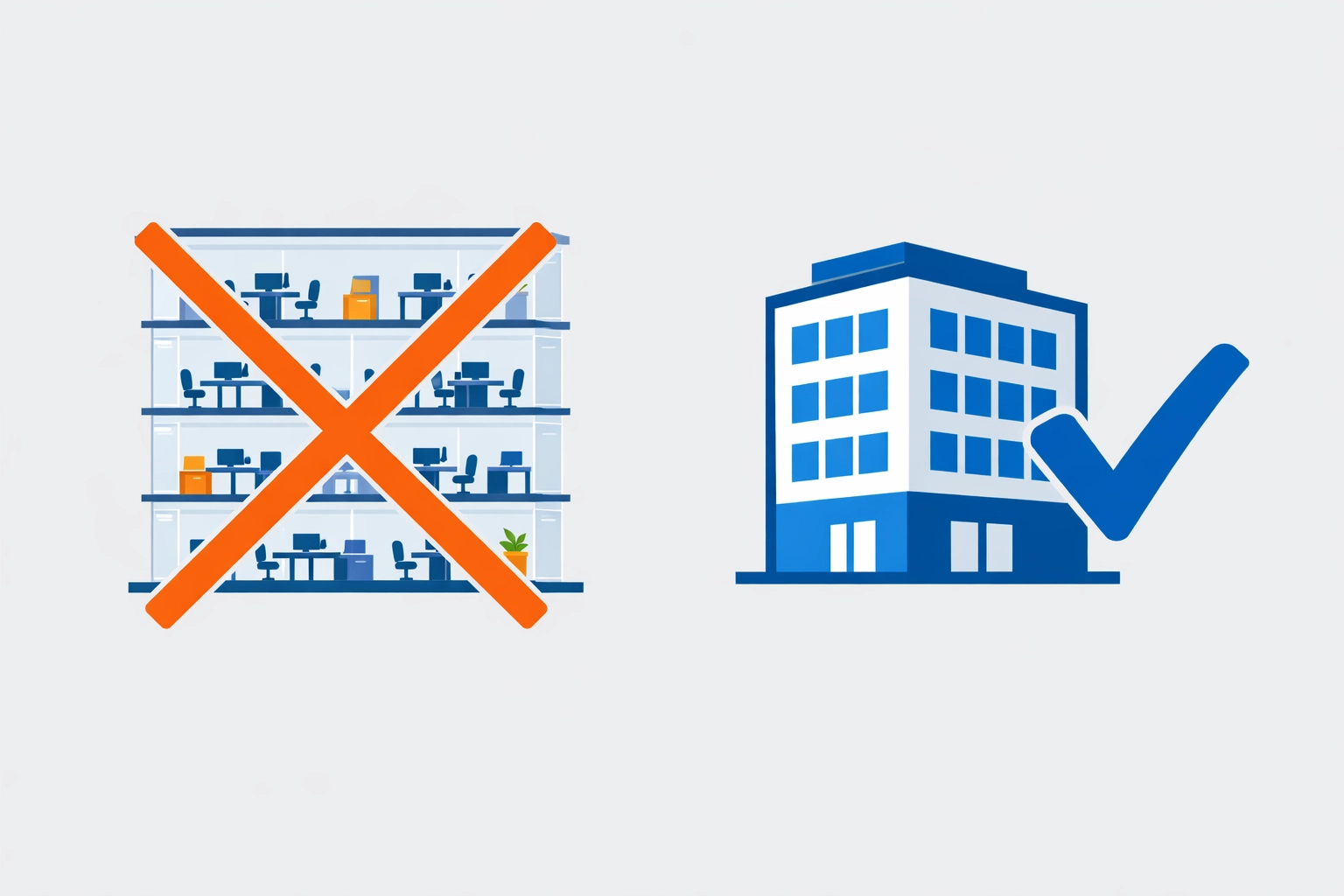
Mistake #1: Breaking Your Building Into Excessive Detail Too Early
When you first set up your building in Portfolio Manager, it's tempting to capture every possible detail. You might think, "I'll track each floor separately" or "I'll break down every wing and tenant space individually."
Stop right there.
This is one of the most common rookie mistakes. While granular data might seem useful, it adds unnecessary complexity without proportional benefit: especially when you're just getting started. For example, breaking down a 12-story office building by individual floors creates a data entry nightmare that's difficult to maintain and prone to errors.
What to do instead: Start with a simpler structure that captures your building as a whole. You can always refine and add detail later as your tracking needs evolve. Focus first on getting complete, accurate whole-building data. Once you have a solid baseline and understand the tool better, then consider whether additional detail serves a specific purpose.
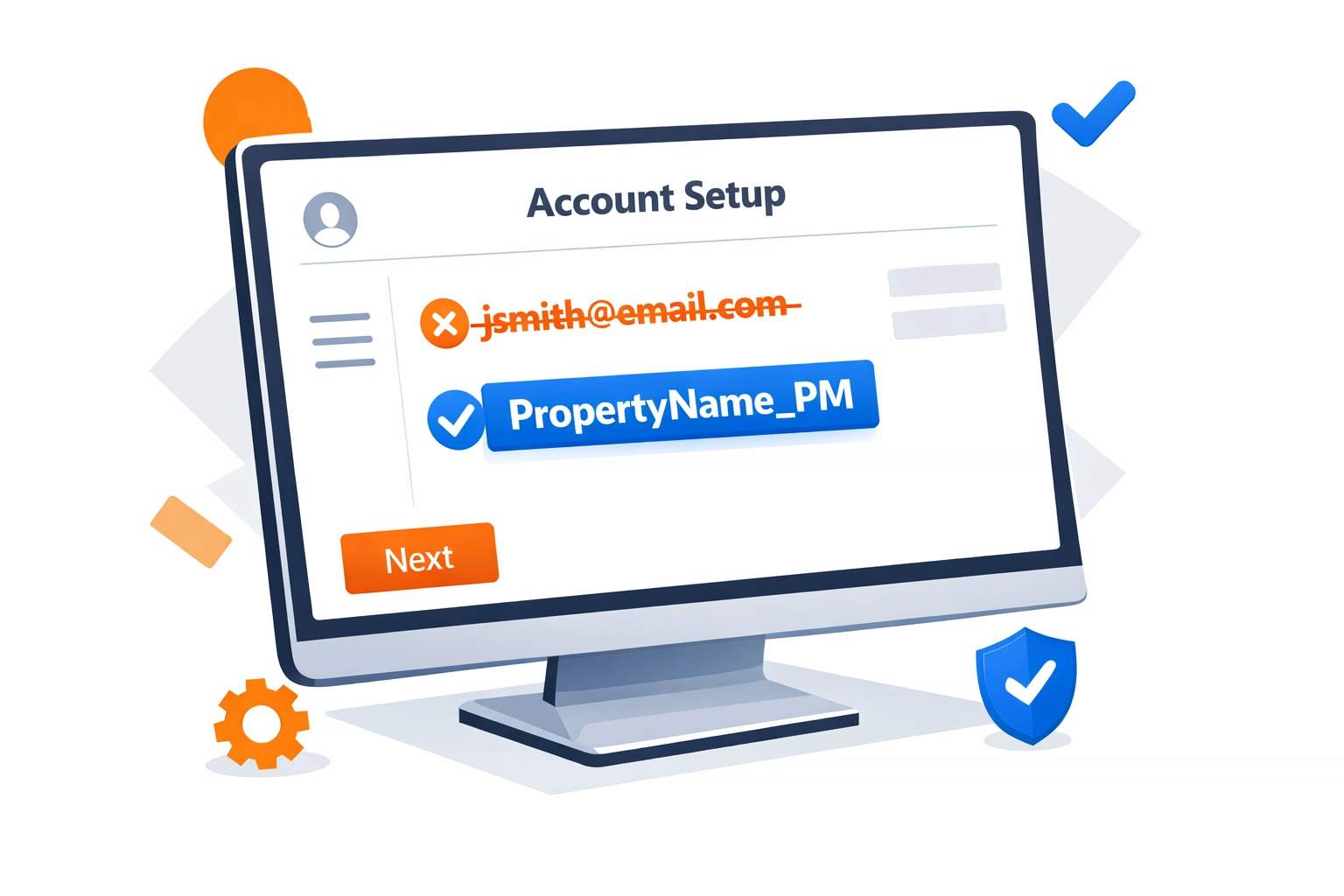
Mistake #2: Selecting an Inappropriate Username
This might sound trivial, but your Portfolio Manager username matters more than you think. Your username becomes permanently tied to your account and appears in reporting, data sharing, and official communications with peers and certification bodies.
Many property managers make the mistake of using personal email addresses or generic usernames like "admin123" or their own names. The problem? That username stays with the account even if you change roles or the property changes hands.
What to do instead: Choose a username that identifies your facility or property management company rather than an individual person. For example, "OceanViewOfficeComplex" or "AtlanticPropertiesPM" is far more professional and sustainable than "jsmith@email.com." This ensures continuity and maintains professionalism in all Portfolio Manager interactions.
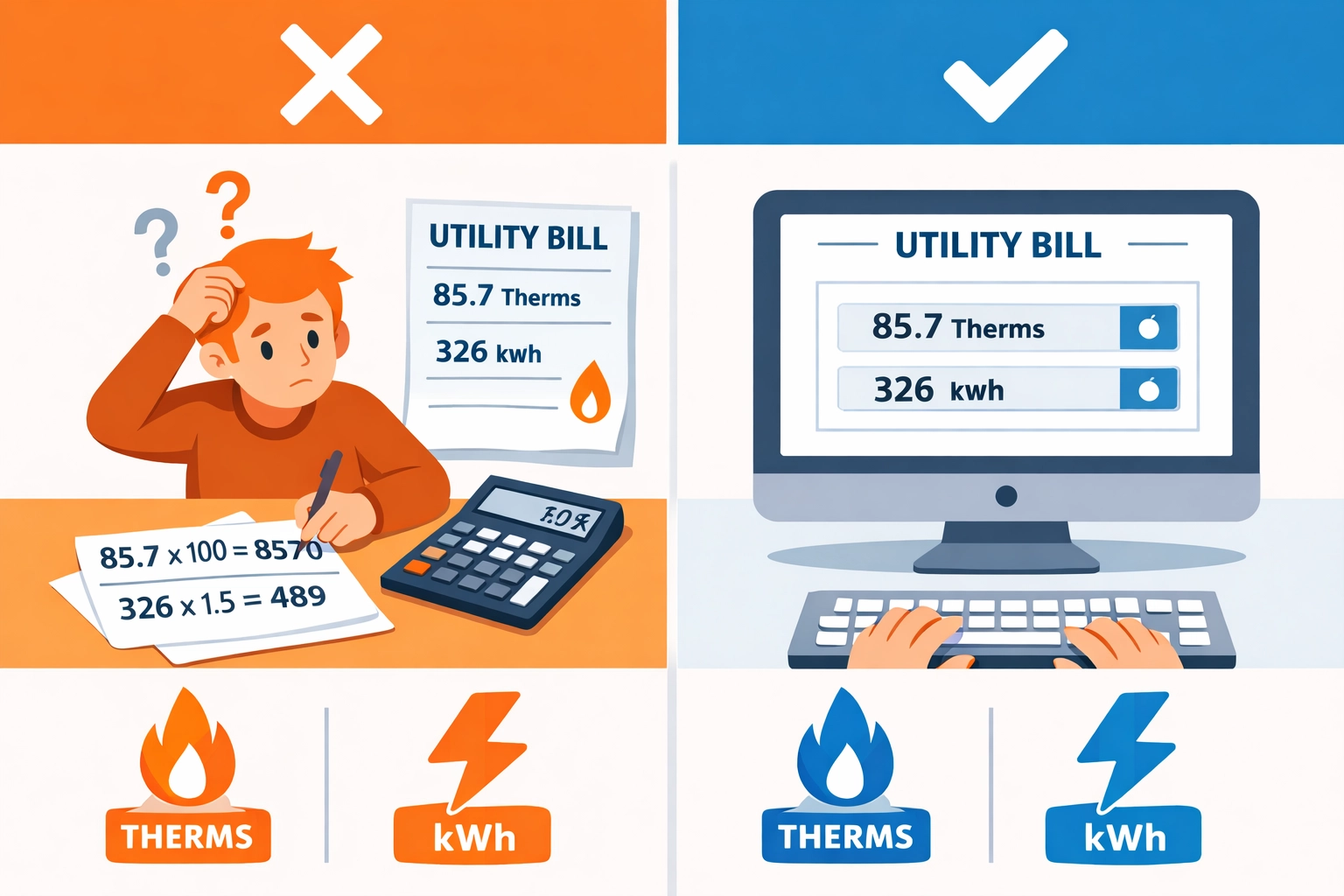
Mistake #3: Failing to Verify Energy Units (And Converting When You Shouldn't)
Here's where things get really problematic. A critical data entry error that throws off all your calculations is converting energy units rather than entering them exactly as they appear on your utility bills.
If your natural gas bill shows usage in therms, enter therms directly into Portfolio Manager. If it's in CCF (hundred cubic feet), enter CCF. Do not attempt to convert these units yourself.
Why? Because Portfolio Manager has built-in conversion factors that handle this automatically. When you manually convert units before entering data, you're essentially converting twice: once when you do it, and again when the system does it. This creates massive calculation errors that invalidate your entire energy profile.
What to do instead:
- Enter energy data exactly as it appears on your utility bills
- Match the units precisely: if the bill says therms, enter therms
- Let Portfolio Manager handle all conversions automatically
- Double-check that you've selected the correct meter type and unit designation in the system
This is especially important for New Jersey property managers dealing with multiple energy sources. Your commercial buildings likely use a combination of electricity, natural gas, and possibly fuel oil. Each comes with different units on billing statements, and accuracy matters for compliance and benchmarking.
Mistake #4: Lacking Data Quality Oversight
Portfolio Manager is fundamentally a database that processes numbers. It doesn't question whether those numbers make sense: it simply calculates based on what you enter. This means data accuracy depends entirely on human input quality.
The problem? Many property managers assign data entry to one person and never verify the numbers. Given that complete Portfolio Manager setup typically requires 40+ hours of initial data entry, it's understandable that you want to delegate this task. But a single erroneous number: like accidentally entering 10,000 kWh instead of 1,000 kWh: can skew all your results and lead to wildly inaccurate energy scores.
What to do instead:
- Assign one primary owner for Portfolio Manager data management (this creates consistency)
- Require a second person to review all data entries before finalizing
- Implement monthly data quality checks comparing Portfolio Manager numbers to actual utility bills
- Watch for anomalies like sudden spikes or drops that don't align with building operations or weather patterns
- Set up alerts within Portfolio Manager to flag unusual meter readings
Think of it like financial accounting: you wouldn't have one person handle all your building's finances without oversight. Energy data deserves the same rigor.
At South Jersey Heating and Cooling, we often catch these errors during energy audits when client data doesn't align with actual system performance. The root cause? Data entry mistakes that went unchecked for months or even years.
Mistake #5: Incomplete Baseline Period Data or Missing Meters
To receive ENERGY STAR metrics and qualify for certification, your property must meet specific data requirements. The most common failure points:
- Incomplete baseline period data (you need a full 12 consecutive months)
- Gaps or overlaps in meter readings
- No meters defined at all in the system
Many property managers enter a few months of data and wonder why Portfolio Manager won't generate a score. Or they set up the building profile but forget to actually add the utility meters. Without complete baseline data, the system can't calculate your ENERGY STAR score or determine certification eligibility.
What to do instead:
- Before starting, gather 12 full months of utility bills for all energy sources
- Ensure you have continuous data with no gaps between billing periods
- Define all relevant meters for your building (electric, gas, oil, steam, etc.)
- Verify that meter data covers the entire baseline period without overlaps
- Update meter data consistently each month going forward
This is particularly important for New Jersey property managers given the state's focus on energy benchmarking and disclosure. Several municipalities are implementing or considering benchmarking ordinances, and incomplete data could put you in compliance jeopardy.
Why These Mistakes Matter for Your Bottom Line
You might be thinking, "These seem like technical details. Do they really matter?"
Absolutely. Here's why:
Inaccurate energy scores mean you can't properly assess building performance or justify capital improvements. If your HVAC system appears to be performing better (or worse) than it actually is, you'll make poor decisions about maintenance, upgrades, or replacements.
Missed ENERGY STAR certification opportunities represent lost value. ENERGY STAR certified buildings command higher rents, attract quality tenants, and have higher resale values. Plus, some New Jersey incentive programs require ENERGY STAR certification for eligibility.
Compliance risks are growing as New Jersey and local municipalities implement stricter energy regulations. Inaccurate or incomplete benchmarking data could result in penalties or prevent you from obtaining necessary permits.
Wasted energy and money continue when you don't have accurate data to identify inefficiencies. Your HVAC system represents the single largest energy user in most commercial buildings: often 40-60% of total energy consumption. Bad data means you can't properly optimize these systems.
How South Jersey Heating and Cooling Can Help
Accurate energy tracking goes hand-in-hand with HVAC system performance. Many property managers discover Portfolio Manager errors only after we conduct a commercial energy audit and the data doesn't match reality.
Our team can help you:
- Verify that your Portfolio Manager data accurately reflects actual building performance
- Identify HVAC inefficiencies that impact your energy scores
- Recommend system upgrades or preventative maintenance strategies that reduce energy consumption
- Develop a commercial maintenance agreement that keeps systems running efficiently year-round
The connection between accurate data and HVAC performance is direct. If your Portfolio Manager score is trending poorly, it's often because your heating and cooling systems aren't operating optimally. Conversely, if your data is flawed, you might miss opportunities to improve HVAC efficiency that could save thousands of dollars annually.
Take the Next Step
Portfolio Manager is a powerful tool: but only when used correctly. These five mistakes are surprisingly common, even among experienced property managers. The good news? They're all preventable with proper setup, consistent oversight, and accurate data entry.
If you're unsure whether your Portfolio Manager data is accurate, or if you want to improve your building's energy performance, South Jersey Heating and Cooling is here to help. We serve commercial properties throughout the region and understand the unique challenges New Jersey property managers face.
Call us at 609-488-2253 or request service to discuss how we can help optimize your building's HVAC systems and support your energy management goals. Whether you need an energy audit, system upgrades, or ongoing maintenance, we have the expertise to help you maximize efficiency and minimize costs.
Your energy data tells a story about your building. Let's make sure it's the right story.