

Heat Pumps vs Traditional HVAC: Which Is Better For Your South Jersey Commercial Building?
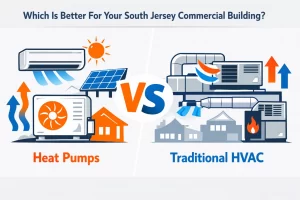

If you manage commercial property in South Jersey, you've probably found yourself asking this question: should you stick with traditional HVAC systems, or is it time to make the switch to heat pumps? It's not a simple answer, and there's a lot riding on getting it right. Your choice impacts everything from monthly utility bills to tenant comfort to your building's long-term value.
The good news? South Jersey's moderate climate actually gives you an advantage when it comes to choosing the right system. Let's break down what you need to know to make an informed decision for your commercial building.
Understanding the Basics: What's the Real Difference?
Before we dive into which system works best for your property, let's clarify what we're actually comparing.
Traditional HVAC systems typically consist of separate heating and cooling units. You've got a furnace or boiler handling the heating (burning natural gas, oil, or using electric resistance), and a separate air conditioning system for cooling. They've been the standard for decades, and there's a reason for that, they're reliable, well-understood, and can handle extreme temperatures.
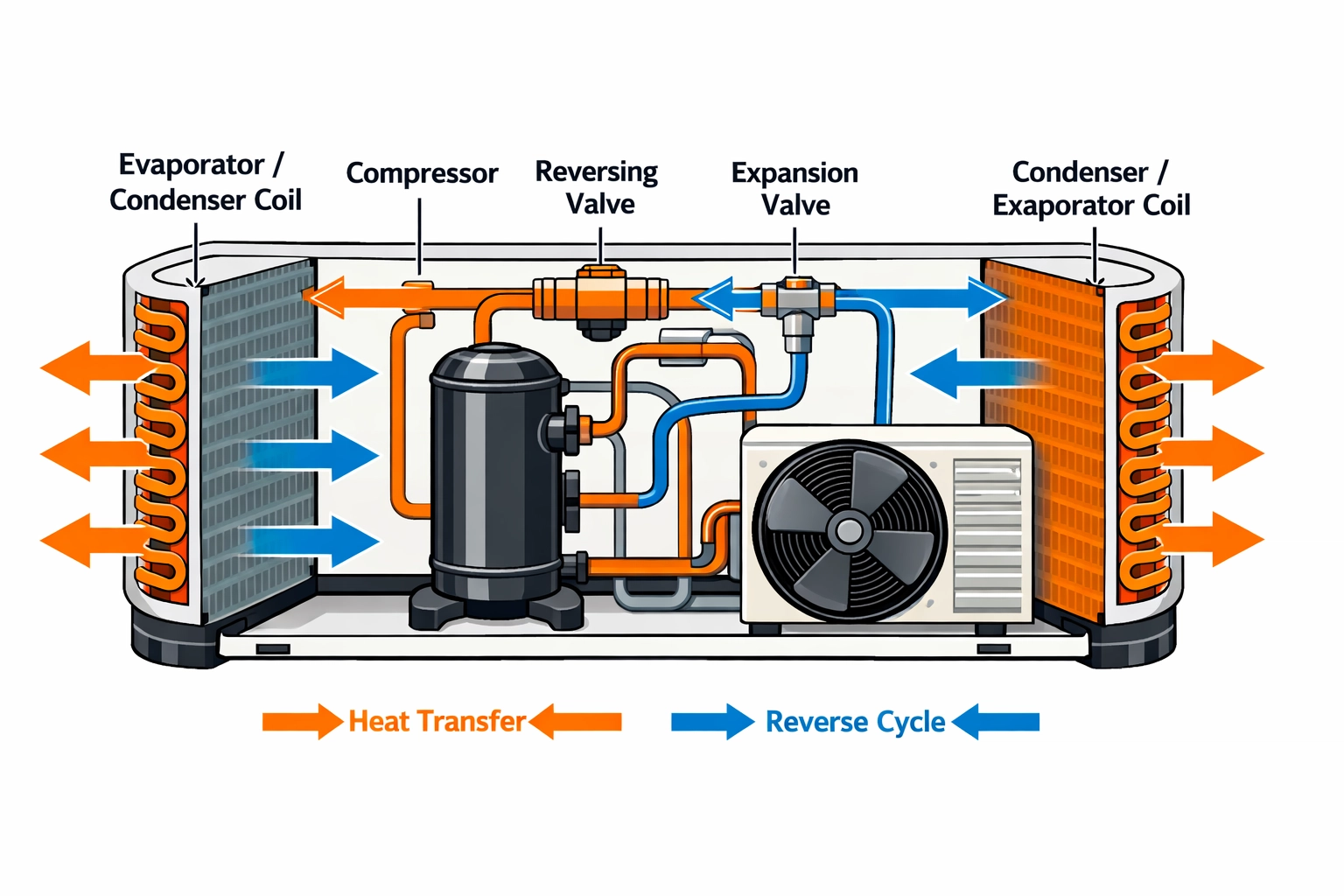
Heat pumps, on the other hand, are essentially two-in-one systems. They don't generate heat by burning fuel. Instead, they transfer heat from one place to another. In winter, they extract heat from outside air (yes, even when it's cold) and move it inside. In summer, they reverse the process, pulling heat out of your building and releasing it outside: just like your AC does.
Think of a heat pump as an air conditioner that can run in reverse. That's essentially what it is.

Why South Jersey's Climate Matters
Here's where location becomes crucial. South Jersey sits in what HVAC professionals call a "moderate climate zone." You get cold winters, sure, but you're not dealing with the extended sub-zero temperatures you'd see in northern New England. Your summers are hot and humid, but not relentlessly so.
This matters because heat pumps perform best in moderate climates. When outdoor temperatures drop below about 25-30°F, older heat pump models start to lose efficiency. But modern heat pumps: especially those designed for cold climates: can maintain efficiency down to much lower temperatures, and South Jersey rarely stays below those thresholds for extended periods.
For your commercial building in Burlington, Camden, Atlantic, or Ocean County, this means heat pumps can realistically handle both your heating and cooling needs year-round. You're not pushing the equipment to its absolute limits the way you might in Minnesota or Arizona.
The Energy Efficiency Factor (And What It Means for Your Bottom Line)
Let's talk numbers, because that's what really matters when you're managing a commercial property.
Heat pumps can reduce your energy usage by up to 50% compared to conventional HVAC systems. They're typically three to four times more efficient than traditional heating methods. Why? Because they're moving heat rather than generating it through combustion or electric resistance.
Here's a simple way to think about it: burning fuel or using electric resistance to create heat is like manufacturing warmth from scratch. A heat pump is more like shopping at a thrift store: you're acquiring something that already exists and repurposing it. Much more cost-effective.
For a commercial building, this efficiency translates directly to lower utility bills. Depending on your facility size, we're talking about potential savings of hundreds or even thousands of dollars monthly. Over the 15-20 year lifespan of a properly maintained heat pump, those savings add up significantly.
Traditional systems, while less efficient, do have one advantage: their fuel sources (natural gas, especially) can sometimes be less expensive than electricity. However, with electricity rates becoming more competitive and the efficiency gap so substantial, heat pumps still typically come out ahead in total operating costs.
Installation Costs vs. Long-Term Savings
Let's address the elephant in the room: heat pumps generally cost more upfront than traditional systems.
A commercial-grade heat pump installation will typically run higher than installing a traditional furnace and AC separately. However: and this is important: you're getting both heating and cooling in one integrated system. You're not maintaining two separate pieces of equipment.
When you factor in the long-term operational savings, most commercial property owners see a return on their heat pump investment within 5-10 years, depending on usage patterns and local utility rates. For a property you plan to hold long-term, this makes heat pumps an excellent investment.
Traditional systems cost less initially but will cost you more month after month in energy bills. If you're working with a tighter upfront budget or dealing with short-term property plans, this might influence your decision.
South Jersey Heating and Cooling has been helping commercial property owners navigate these decisions for over three decades. We can run the numbers specific to your building and help you understand the true cost comparison. Give us a call at 609-488-2253 to discuss your particular situation.
Maintenance Requirements: What to Expect
Here's an area where heat pumps shine: lower maintenance needs.
Because heat pumps don't rely on combustion, there's no soot, no carbon buildup, no concerns about gas leaks or carbon monoxide. They have fewer moving parts than traditional systems. This translates to fewer breakdowns and lower maintenance costs over time.
Your heat pump will need:
- Regular filter changes (just like any HVAC system)
- Annual professional inspections
- Periodic refrigerant level checks
- Coil cleaning
Traditional systems require all of the above, plus:
- Combustion chamber inspections
- Flue and venting checks
- Fuel line maintenance
- More frequent part replacements due to the wear from combustion processes
Both systems benefit tremendously from preventative maintenance agreements, which can extend equipment life and prevent costly emergency repairs. However, heat pumps typically experience fewer unexpected failures, which means less disruption to your tenants or business operations: something South Jersey Heating and Cooling takes seriously with our minimal disruption approach to service.
Indoor Air Quality and Comfort
This often gets overlooked in the heat pump vs. traditional HVAC debate, but it matters for commercial spaces.
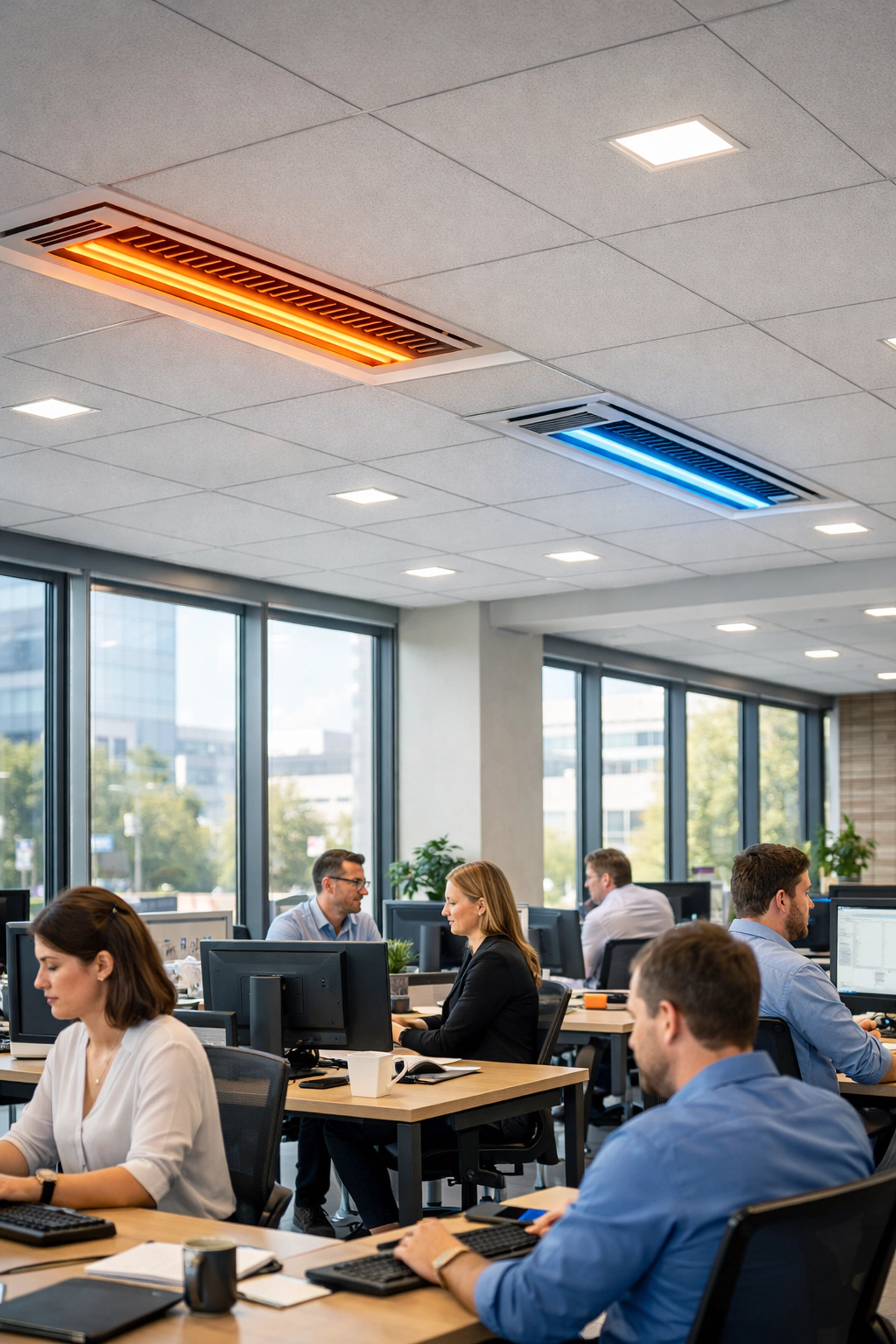
Heat pumps maintain more consistent temperatures throughout your building. Traditional systems tend to create more temperature swings: blasting hot air when heating, then shutting off until the temperature drops again. This cycling creates uncomfortable fluctuations.
Heat pumps run more steadily, making smaller adjustments to maintain your setpoint. The result? More consistent comfort for your tenants, customers, or employees.
Additionally, heat pumps typically provide better humidity control and air filtration. They're constantly circulating and filtering air, which can contribute to better indoor air quality: increasingly important in commercial environments.
And here's a bonus: heat pumps run quieter than traditional HVAC systems. No rumbling furnace or noisy combustion. For properties where noise matters: think medical offices, professional buildings, or retail spaces: this is a genuine advantage.
When Traditional Systems Still Make Sense
I'm not here to tell you that heat pumps are always the answer. That wouldn't be honest, and it wouldn't serve your interests.
Traditional systems may still be the better choice if:
Your building has unusually high heating demands. Some commercial facilities: manufacturing spaces, warehouses with minimal insulation, buildings with unique architectural features: have heating requirements that can challenge heat pump capacity during peak winter months.
You have access to very cheap natural gas. In some areas, natural gas rates are so favorable that even with lower efficiency, traditional gas heating remains more economical. This is less common but worth calculating for your specific location.
Your electrical service is inadequate. Heat pumps require sufficient electrical capacity. If your building's electrical infrastructure would need major upgrades to support a heat pump, that changes the cost equation.
You're dealing with a very short-term property hold. If you're planning to sell within a few years, you might not recoup the higher initial investment in a heat pump.
The key is getting an honest, professional assessment of your specific building and situation. Every commercial property is different, with unique heating and cooling loads based on size, insulation, occupancy, and usage patterns.
Environmental Considerations and Incentives
This might matter to you, or it might not: but it's worth mentioning.
Heat pumps produce significantly fewer carbon emissions than fossil fuel-burning systems. If your company has sustainability goals, or if you're pursuing LEED certification for your building, a heat pump can help you meet those objectives.
Additionally, various federal, state, and utility incentives may be available for commercial properties installing high-efficiency heat pumps. These incentives can substantially offset the higher initial costs. The landscape of available programs changes regularly, so it's worth investigating what's currently available in New Jersey for commercial installations.
Making Your Decision: Questions to Ask
Here's how to approach this decision methodically:
-
What are your current annual heating and cooling costs? Get at least two years of utility bills to understand your baseline.
-
What's the condition of your existing equipment? If your current system is limping along and repairs are mounting, replacement becomes more urgent regardless of which type you choose.
-
What are your building's specific heating and cooling loads? This requires a professional assessment: guessing leads to undersized or oversized equipment.
-
What's your planned timeline for the property? Long-term ownership favors heat pumps; shorter-term might favor lower upfront costs.
-
What's your electrical capacity? This determines whether heat pumps are even feasible without additional electrical work.
-
What matters most to your tenants or occupants? Consistent comfort? Lower operating costs that could translate to lower rents? Sustainability?
The Bottom Line for South Jersey Commercial Properties
For most commercial buildings in South Jersey, heat pumps deliver superior energy efficiency, lower long-term costs, reduced maintenance, and improved comfort compared to traditional HVAC systems. The moderate climate here makes them particularly well-suited to handle year-round heating and cooling demands.
However, your specific building, budget, and business objectives might lead to a different conclusion. There's no one-size-fits-all answer in commercial HVAC.
What really matters is making an informed decision based on accurate information about your property's needs and a realistic cost-benefit analysis.
South Jersey Heating and Cooling brings three decades of experience helping commercial property owners make exactly these kinds of decisions. Our licensed professionals can assess your building, run the numbers, explain your options clearly, and install whichever system makes the most sense for your situation: all while guaranteeing your satisfaction and minimizing disruption to your operations.
Ready to have an honest conversation about what's right for your commercial property? Call us at 609-488-2253 or request service through our website. We'll help you cut through the noise and make the choice that serves your building and your bottom line best.