

Energy Management Systems vs. Building Automation: Which Is Better For Your Commercial Property?

If you manage a commercial property in South Jersey, you've likely heard both terms thrown around: Energy Management Systems and Building Automation Systems. They sound similar. They both promise to save you money and improve your building's performance. But they're not the same thing: and understanding the difference matters when you're making investment decisions for your property.
The truth is, neither system is universally "better." The right choice depends entirely on your property's specific goals, size, and operational needs. Let's break down what each system does, how they differ, and which approach makes the most sense for your commercial building.
What Is an Energy Management System (EMS)?
An Energy Management System: sometimes called a Building Energy Management System (BEMS): is designed to do one thing exceptionally well: track, analyze, and optimize your building's energy consumption.
Think of an EMS as the data analyst of your building operations. It continuously monitors how much energy your property uses, when it's being used, and where inefficiencies exist. The system collects granular data from your HVAC equipment, lighting, and other energy-consuming systems, then provides detailed reports and analytics.
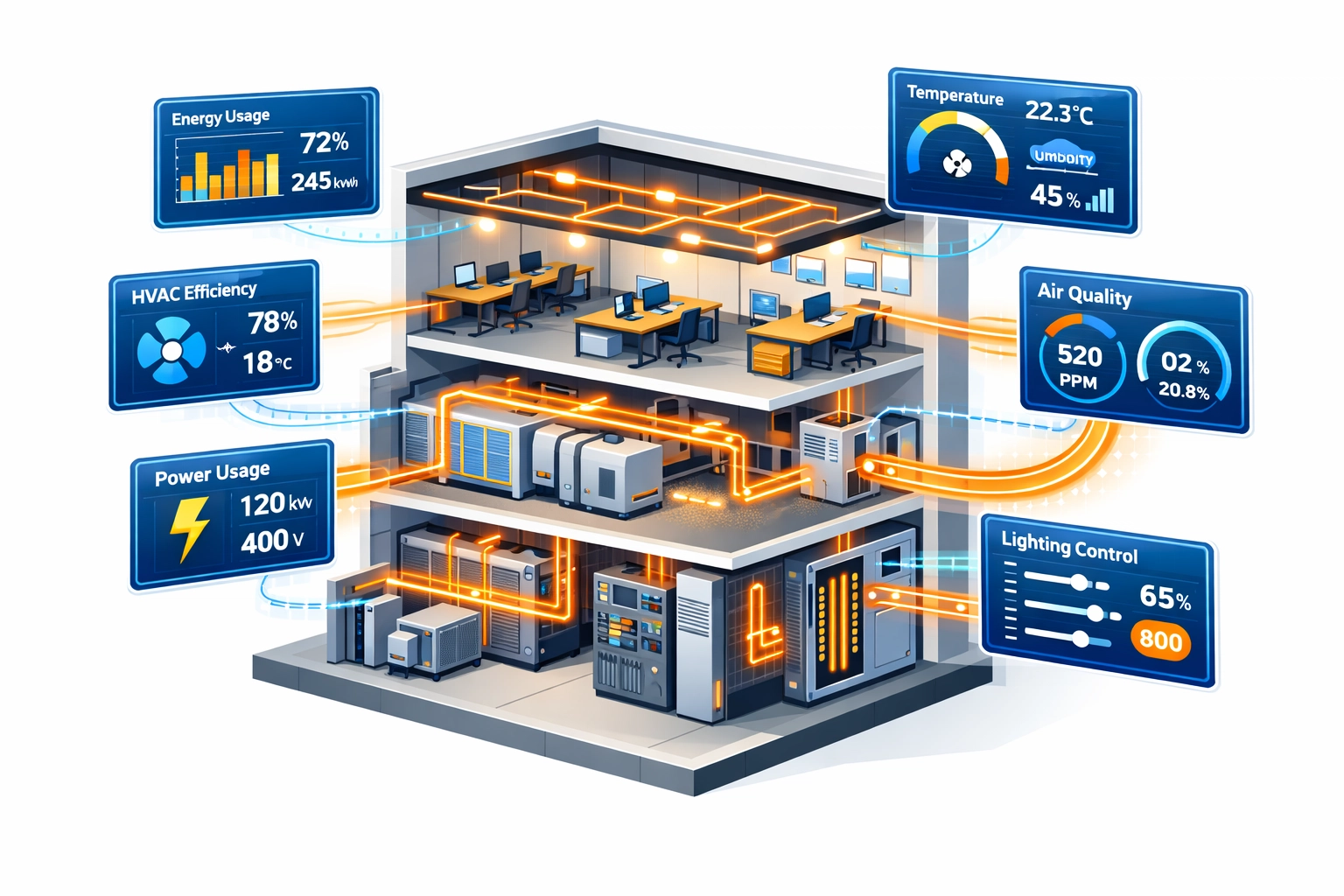
Here's what an EMS helps you accomplish:
- Identify energy waste: The system pinpoints exactly where and when your building is using excess energy: whether it's HVAC systems running during unoccupied hours or equipment operating inefficiently.
- Track performance metrics: You'll see energy intensity measurements, carbon emissions data, and usage patterns over time, giving you concrete numbers to work with.
- Support sustainability goals: If you need to meet environmental compliance standards or reduce your carbon footprint, an EMS provides the documentation and insights you need.
- Optimize long-term performance: The analytics help you make informed decisions about equipment upgrades, operational changes, and energy procurement strategies.
An EMS doesn't necessarily control your building systems directly: its strength lies in giving you the information needed to make smarter energy decisions.
What Is a Building Automation System (BAS)?
A Building Automation System takes a different approach. Rather than focusing primarily on data analysis, a BAS automates and controls your building's core operational systems in real time.
Think of a BAS as the operator of your building. It's the system that actually adjusts your HVAC settings, controls lighting based on occupancy, manages security systems, and ensures all your building systems work together efficiently throughout the day.
Here's what a BAS handles:
- Real-time system control: The BAS makes immediate adjustments to heating, cooling, ventilation, and lighting based on current conditions and schedules.
- Automated responses: When occupancy sensors detect an empty conference room, the BAS can automatically adjust temperature settings and dim the lights: no human intervention required.
- Integrated operations: A BAS connects your HVAC, lighting, security, and other systems so they communicate and work together seamlessly.
- Comfort management: The system maintains consistent temperature and air quality throughout your building, responding to changes as they happen.
A well-configured BAS can reduce your energy costs by up to 30% through automated adjustments alone. The savings come from eliminating human error, responding instantly to changing conditions, and ensuring systems don't run unnecessarily.
The Key Differences Between EMS and BAS
While both systems aim to improve building performance, they approach the problem from different angles:
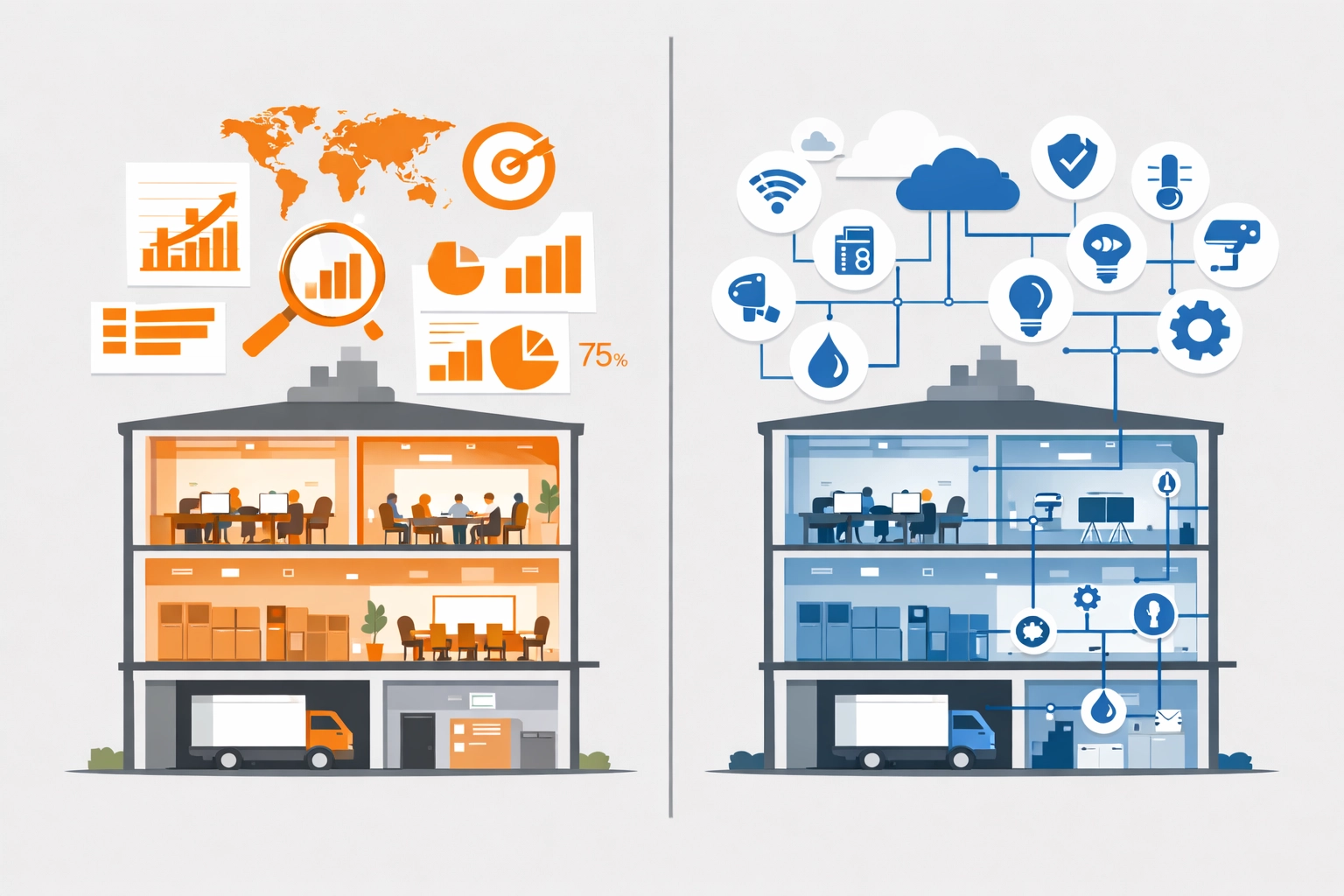
Focus and Function: An EMS analyzes energy data to find inefficiencies and guide long-term strategy. A BAS automates day-to-day operations and provides immediate system control.
Data vs. Action: An EMS excels at showing you what's happening with detailed metrics and analytics. A BAS excels at doing something about it through automated control and real-time adjustments.
Timeframe: An EMS supports long-term energy optimization and strategic planning. A BAS handles minute-by-minute operational needs and immediate comfort requirements.
Primary Users: Energy managers and sustainability teams rely heavily on EMS data for reporting and planning. Facility managers and building operators work with BAS controls for daily operations.
Understanding these differences helps you determine which system: or combination of systems: your property actually needs.
When an Energy Management System Makes Sense
You should prioritize an EMS if your primary goals center on reducing energy costs and meeting sustainability targets. These systems shine in specific situations:
Large commercial offices benefit enormously from EMS capabilities. If you're managing a 100,000+ square foot office building, the granular analytics help identify patterns you'd never spot manually. You'll discover inefficiencies across multiple floors, optimize operating schedules based on actual usage data, and justify equipment upgrades with hard numbers.
Industrial facilities with complex energy profiles need the deep analytics an EMS provides. When you're running manufacturing equipment, multiple HVAC zones, and varied operational schedules, understanding exactly where energy is consumed becomes critical to controlling costs.
Properties with sustainability mandates require the detailed reporting an EMS delivers. If you need to demonstrate compliance with environmental regulations, track carbon emissions, or achieve LEED certification, an EMS provides the documentation and metrics you need.
Multi-building portfolios gain significant advantages from EMS platforms that can compare energy performance across different properties. You can identify which buildings underperform, benchmark against best-in-class properties, and roll out improvements systematically.
South Jersey Heating and Cooling has helped numerous commercial property owners implement energy management strategies that reduce consumption and costs. If you're spending six figures annually on energy, the insights from an EMS typically pay for themselves within the first year.
When a Building Automation System Makes More Sense
You should prioritize a BAS if you need focused control over day-to-day building operations and immediate improvements to comfort and efficiency.
Small to medium commercial properties (under 50,000 square feet) often get more immediate value from BAS capabilities. You need systems that simply work reliably without requiring dedicated energy analysts to interpret complex reports.
Mixed-use developments require the comprehensive operational control a BAS provides. When you're managing retail spaces, office areas, and possibly residential units in one property, coordinating HVAC, lighting, and security across different zones becomes essential.
Properties with occupancy variations benefit from automated BAS responses. If your building has conference rooms, training centers, or spaces with unpredictable usage patterns, a BAS adjusts systems immediately based on actual occupancy rather than fixed schedules.
Buildings with aging manual systems see dramatic improvements when upgrading to BAS automation. If your facility team still walks around manually adjusting thermostats or switching systems on and off, a BAS eliminates that inefficiency entirely.
The immediate cost savings from BAS automation: through eliminating wasted runtime, responding to real conditions, and preventing human error: often make this the logical first investment for many commercial properties.
Why Integration Delivers Maximum Value
Here's what South Jersey Heating and Cooling consistently tells property owners: the real question isn't which system is better: it's how to use both effectively together.
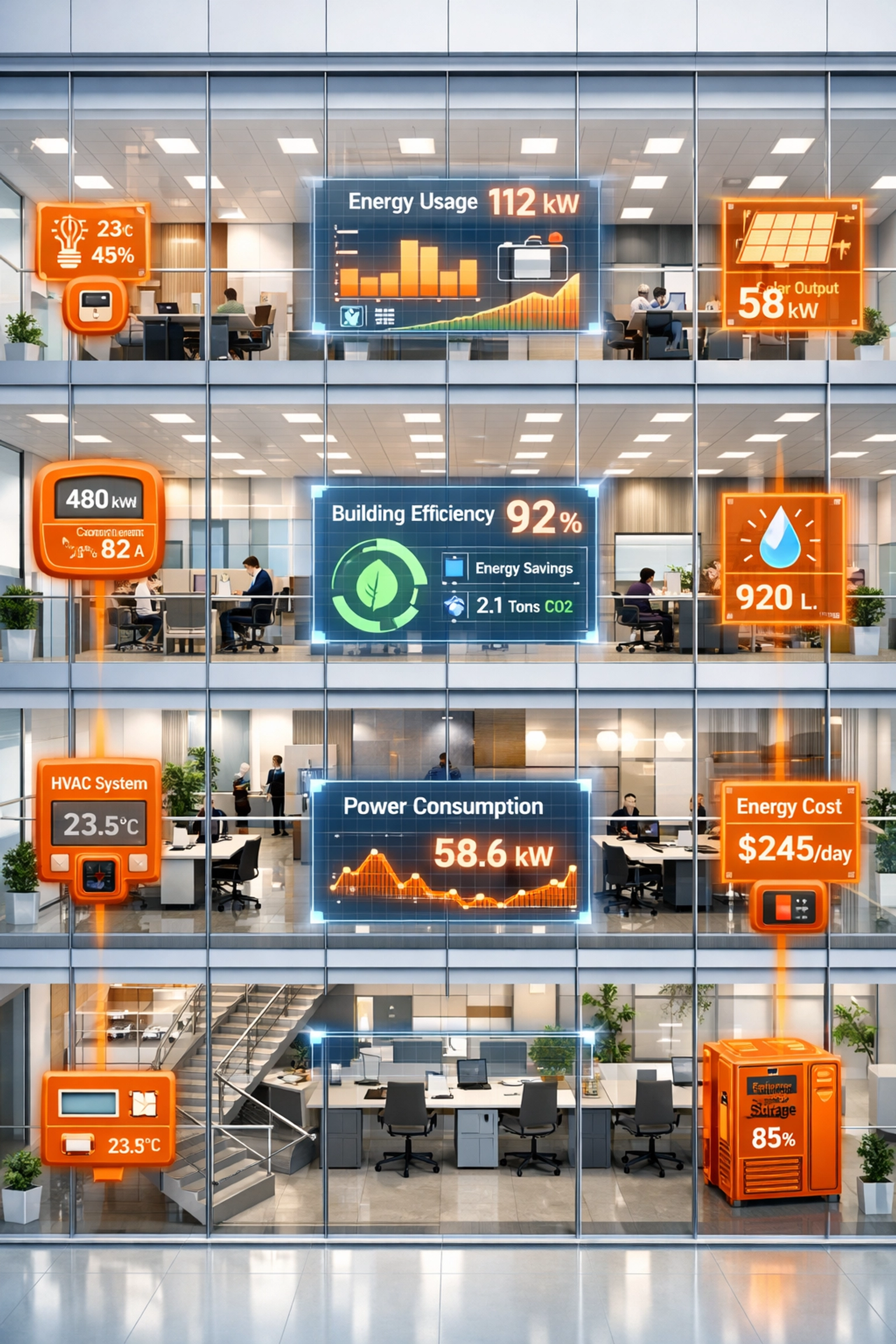
When you integrate an EMS with your BAS, you create a powerful combination. The BAS handles automated operations and immediate adjustments. The EMS analyzes the performance data and identifies opportunities for further optimization. Together, they deliver:
Continuous improvement: The EMS measures what the BAS is doing, identifies patterns, and suggests refinements. Your automation gets smarter over time based on actual performance data.
Lower energy costs: You get the immediate 30% savings from BAS automation, then additional reductions as EMS analytics reveal deeper inefficiencies to address.
Better decision-making: When it's time to replace equipment or upgrade systems, you have concrete data showing actual performance, usage patterns, and projected ROI.
Compliance and reporting: The EMS tracks and documents what your automated systems achieve, providing the sustainability metrics and compliance reports you need.
An integrated approach bridges the gap between facility operations and energy strategy. Your building operates efficiently day-to-day while also progressing toward long-term performance and sustainability goals.
Making the Right Choice for Your Property
So which system should you invest in first? Start by asking yourself these questions:
What's your primary challenge? If you're struggling with high energy bills but don't understand where the waste occurs, start with an EMS. If your building operates inefficiently because systems aren't automated or coordinated, prioritize a BAS.
What's your building size and complexity? Larger properties with complex operations typically need both systems. Smaller properties might start with BAS automation and add EMS capabilities as needs grow.
What are your immediate vs. long-term goals? If you need quick operational improvements and cost savings, BAS delivers faster results. If you're planning major efficiency upgrades or need sustainability reporting, EMS provides the foundation for strategic decisions.
What's your budget? A BAS installation for a medium-sized commercial building might run $30,000-$100,000 depending on complexity. An EMS platform can range from $10,000-$50,000 for software and necessary metering equipment. Many properties phase in systems over time rather than implementing everything at once.
The team at South Jersey Heating and Cooling has extensive experience with commercial HVAC controls and can assess your specific situation. We'll evaluate your building type, current systems, operational goals, and budget to recommend the approach that makes the most sense.
Your Next Steps
If you're managing a commercial property in South Jersey and wondering whether an Energy Management System, Building Automation System, or both would benefit your operations, let's have a conversation.
We'll walk through your building, understand your current challenges, and provide straightforward recommendations based on what will actually deliver value for your specific property. No pressure, no sales pitch: just practical advice from professionals who understand commercial HVAC and building controls.
Contact South Jersey Heating and Cooling at 609-488-2253 or request a consultation to discuss your building automation and energy management options. We're here to help you make informed decisions that improve your property's performance and your bottom line.