

Boost Your Employee Productivity Instantly with These 5 Indoor Air Quality Tricks
Poor indoor air quality is costing your business more than you think. Studies show that improving workplace air quality can boost employee productivity by up to $6,500 per person per year and increase cognitive performance by 61%. That's not pocket change: that's a substantial return on investment that every commercial property owner in South Jersey should be paying attention to.
The good news? You don't need to overhaul your entire building to see results. South Jersey Heating and Cooling has identified five simple indoor air quality tricks that you can implement quickly to start seeing immediate improvements in your employees' focus, energy levels, and overall performance.
Why Indoor Air Quality Matters More Than You Think
Before we dive into the solutions, let's talk about what's really happening in your building. Poor indoor air quality reduces office productivity by 6-10%, and that's just the tip of the iceberg. When your employees can't think clearly, make decisions quickly, or stay focused throughout the day, your entire operation suffers.
The culprits are often invisible: fine particulate matter, elevated CO2 levels, chemical pollutants from office equipment, and inadequate ventilation. These factors create what researchers call "sick building syndrome": and it's affecting your bottom line every single day.
But here's the encouraging part: small changes to your commercial HVAC system and building management practices can yield dramatic improvements. You don't need to wait months or spend tens of thousands of dollars. These five tricks can be implemented quickly and will start improving your workplace environment almost immediately.
Trick #1: Upgrade to HEPA Filtration Systems
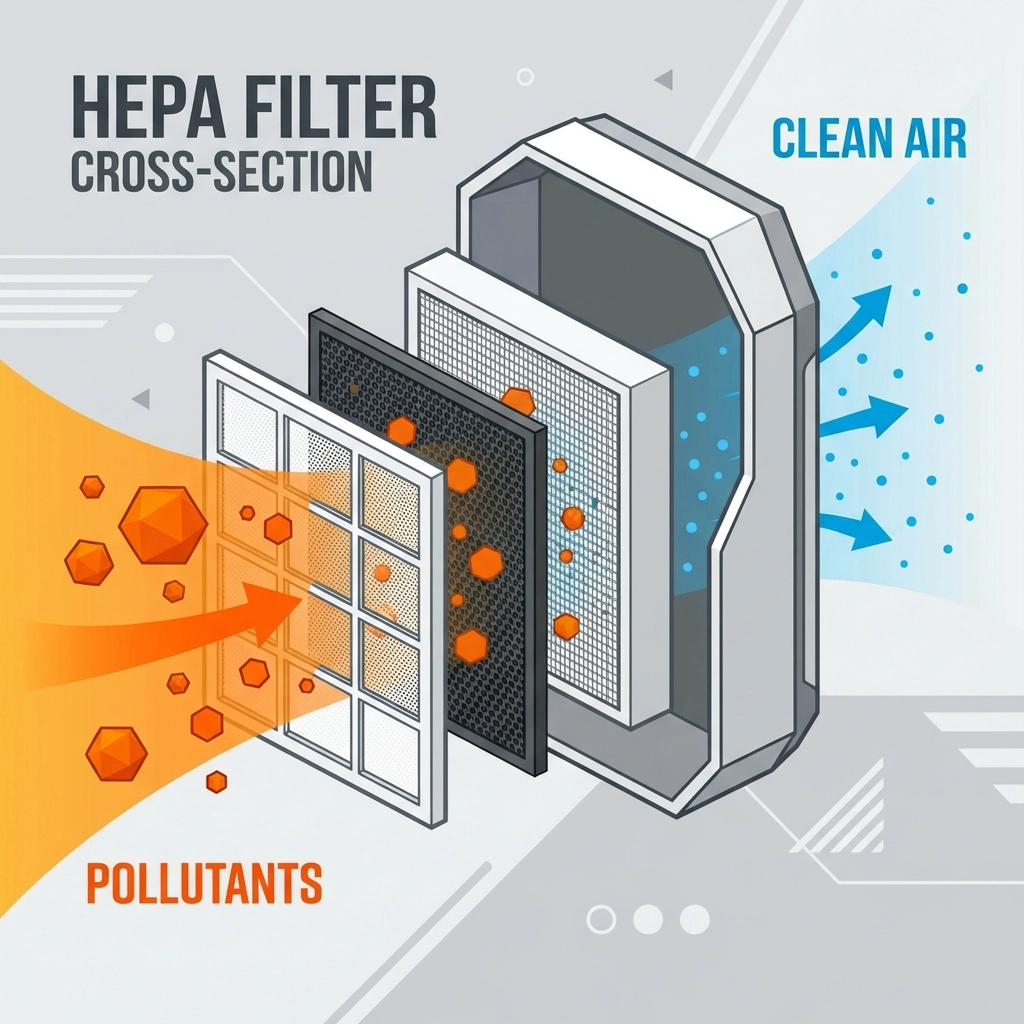
The fastest way to improve your indoor air quality is to install high-efficiency particulate air (HEPA) filters in your existing HVAC system. These filters capture 99.97% of particles that are 0.3 micrometers or larger, including pollen, dust, mold spores, and other pollutants that cloud your employees' thinking.
HEPA filters work by forcing air through a fine mesh that traps harmful particles. When your employees aren't constantly breathing in these irritants, their concentration improves, they experience fewer headaches, and their cognitive function gets a measurable boost.
Here's what you need to know about implementing HEPA filtration:
- Check compatibility first: Not all commercial HVAC systems can handle HEPA filters without modifications. The filters create more resistance to airflow, which means your system needs adequate fan capacity.
- Consider portable units for immediate results: If your system needs upgrades to handle HEPA filters, portable HEPA air purifiers can provide immediate benefits in high-traffic areas like conference rooms and open office spaces.
- Plan for regular maintenance: HEPA filters need replacement every 6-12 months depending on your building's air quality challenges.
South Jersey Heating and Cooling can assess your current system and recommend the best HEPA solution for your specific building and budget.
Trick #2: Increase Your Ventilation Rates
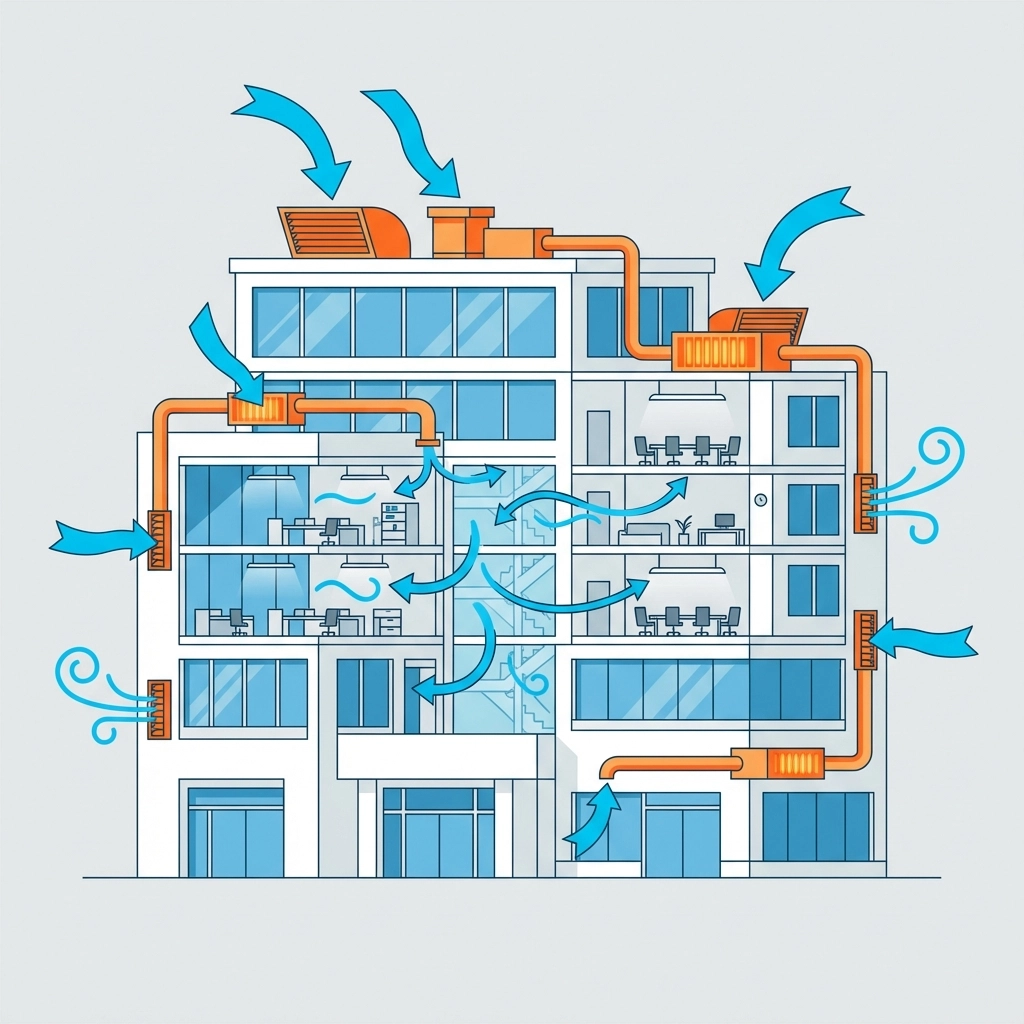
Most commercial buildings operate with the minimum ventilation rates required by code: but minimum isn't optimal for productivity. Research shows that office buildings with above-average ventilation rates experience 10% to 80% fewer sick building syndrome symptoms.
The sweet spot for cognitive performance is around 40 cubic feet per minute (cfm) of outdoor air per person. When you increase clean outdoor air supply from the typical 3 liters per second per person to 30 liters per second per person, you'll see significant improvements in your employees' performance on complex tasks.
Here's how to optimize your ventilation:
- Audit your current rates: Have your HVAC contractor measure your building's actual air exchange rates, not just what the system is designed to deliver.
- Adjust dampers and controls: Many buildings can improve ventilation simply by adjusting outdoor air dampers and optimizing HVAC control sequences.
- Consider economizer upgrades: When outdoor conditions allow, economizers can bring in more fresh air without significantly increasing energy costs.
The key is balancing increased ventilation with energy efficiency. A professional assessment can identify opportunities to boost air quality without dramatically increasing your utility bills.
Trick #3: Eliminate Hidden Pollution Sources
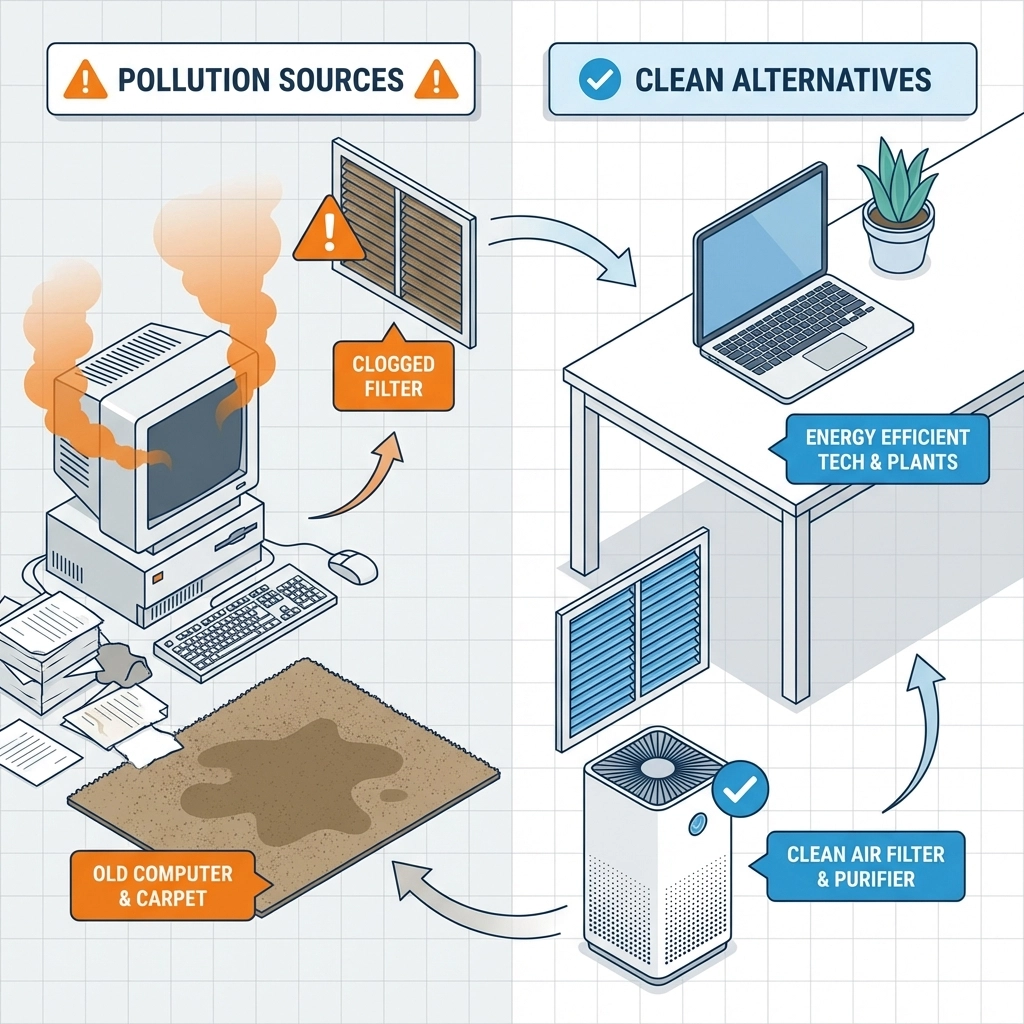
You might be surprised by what's polluting your indoor air. Old carpet, outdated office equipment, and even dirty HVAC filters can be constantly releasing pollutants that impair your employees' cognitive function.
Common indoor pollution sources include:
- Aging carpets and flooring materials that off-gas volatile organic compounds (VOCs)
- Old computers and office equipment that emit chemical pollutants
- Dirty or clogged HVAC filters that recirculate contaminated air
- Poorly maintained copy machines and printers that release ozone and particulates
- Chemical cleaning products used during off-hours that leave residual fumes
The solution isn't necessarily to replace everything immediately. Often, simple maintenance and strategic replacements can eliminate the worst offenders:
- Replace old, dirty HVAC filters every 1-3 months instead of waiting for the manufacturer's recommended schedule
- Relocate printers and copy machines to well-ventilated areas away from workstations
- Switch to low-VOC cleaning products and schedule cleaning during off-hours with adequate ventilation
- Assess flooring in high-traffic areas and consider replacing the worst sections first
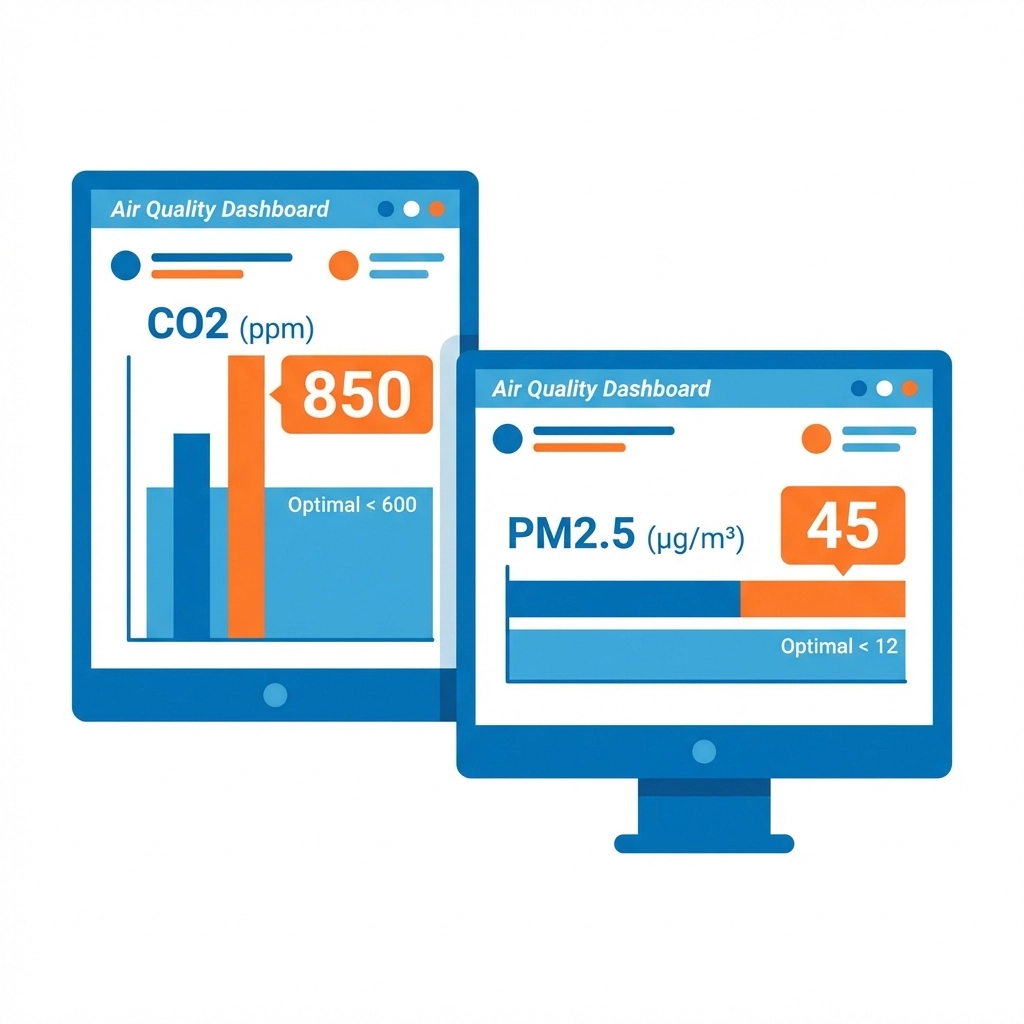
Trick #4: Monitor CO2 and Particulate Matter Levels
What gets measured gets managed. Installing simple monitoring systems for CO2 and fine particulate matter (PM2.5) gives you real-time data about your indoor air quality and helps you make informed decisions about when to adjust your HVAC system.
Higher CO2 levels directly correlate with slower response times and reduced accuracy on cognitive tasks. When CO2 concentrations exceed 1,000 parts per million (ppm), your employees' decision-making abilities start to decline noticeably.
Here's how to implement effective monitoring:
- Install CO2 sensors in representative locations throughout your building, especially in conference rooms and areas with high occupancy
- Set up alerts when CO2 levels exceed 800 ppm, giving you time to increase ventilation before productivity drops
- Monitor PM2.5 levels to track fine particulate matter that affects respiratory health and cognitive function
- Use the data to optimize HVAC schedules and determine when additional ventilation or filtration is needed
Modern building automation systems can integrate these sensors and automatically adjust your HVAC system to maintain optimal air quality throughout the day.
Trick #5: Implement Strategic Cleaning and Maintenance Practices
Regular cleaning and HVAC maintenance directly impact your indoor air quality, but timing and methods matter more than frequency. The goal is to remove pollutants without introducing new ones or disrupting the work environment.
Effective cleaning and maintenance strategies include:
- Schedule intensive cleaning during off-hours to allow time for air circulation before employees return
- Use microfiber cleaning materials that capture particles instead of redistributing them
- Maintain consistent humidity levels between 30-50% to prevent mold growth and reduce static electricity that attracts dust
- Clean HVAC system components regularly, including coils, drains, and ductwork
South Jersey Heating and Cooling offers comprehensive commercial preventative maintenance programs that keep your HVAC system running efficiently while maintaining optimal indoor air quality.
The Bottom Line: Small Changes, Big Results
Improving your indoor air quality doesn't require a massive capital investment or months of construction. These five tricks can be implemented gradually, and you'll start seeing results: in the form of more alert, productive employees: almost immediately.
The return on investment is compelling. When you consider that poor indoor air quality is costing you 6-10% in productivity losses, even modest improvements can save thousands of dollars per employee per year. Better air quality also means fewer sick days, lower healthcare costs, and improved employee satisfaction and retention.
Ready to Boost Your Workplace Productivity?
Don't let poor indoor air quality continue to drag down your business performance. South Jersey Heating and Cooling has the expertise and experience to help you implement these indoor air quality improvements quickly and cost-effectively.
Whether you need indoor air quality assessment, HVAC system upgrades, or ongoing maintenance to keep your air clean and fresh, our team is ready to help you create a more productive workplace environment.
Call South Jersey Heating and Cooling at 609-488-2253 today to schedule your indoor air quality consultation. Your employees: and your bottom line( will thank you.)